Compare Clothing Measurements Before Choosing Your Size
Find a shirt whose fit you already love, then compare it with the size chart on your next find. Checking chest, shoulder, length and sleeve together helps you choose for the fit you want instead of relying on the letter inside the collar.
Turn a good fit into a useful comparison
- Choose a similar garment. Compare a polo with a polo or a hoodie with a hoodie. Note what you want to keep: room through the chest, shoulder position, body length or sleeve reach.
- Check what the chart measures. A body chart is for measurements around the wearer. A finished-garment chart is for measurements of the clothing. Use your body for the first and your reference garment for the second.
- Match the method and unit. Check whether chest means flat width or circumference, where length starts, and whether sleeve length begins at the shoulder or centre back. Measure your garment the same way.
- Compare the whole row. A promising chest measurement can sit beside a length or shoulder measurement you would find uncomfortable. Keep the four fields together as you shortlist sizes.
For a flat-width comparison, lay your reference garment on a level surface and follow the chart’s measurement points. Write the unit beside each result. Keep width and circumference separate rather than doubling a number just to make two charts look comparable.
Try it with the City Polo Shirt chart
Open the City Polo Shirt find, 5447. Its attached chart uses a cm header and gives these values for S:
| Chart field | S row, cm | Your comparison |
|---|---|---|
| Chest · 胸围 | 100 | Check body or garment, then width or circumference |
| Shoulder · 肩宽 | 44 | Use the same shoulder points |
| Garment length · 衣长 | 68/71 | Ask what each length refers to |
| Sleeve · 袖长 | 59 | Match the starting point and cuff endpoint |
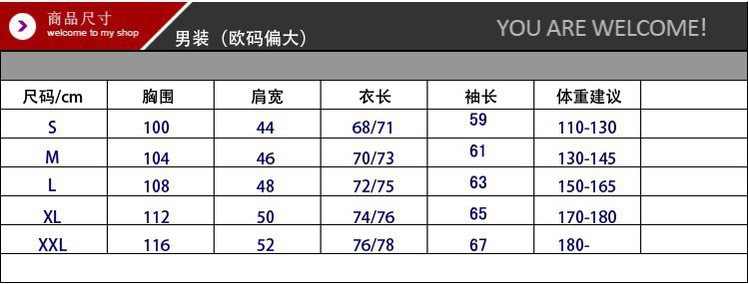
Before choosing from this chart, confirm that it applies to your selected shirt option and ask for the measurement points, the chest measurement basis and the meaning of 68/71. Treat the values as the listing’s chart entries, not measurements of a shirt you have received.
For this shirt option, is chest measured around the finished garment or around the wearer? Where do the sleeve and garment-length measurements start, and what do the two length values refer to?
Once those details are clear, put your reference garment’s measurements beside the relevant size row. If you want a different fit, identify the part you want to change—more chest room or a shorter body, for example—rather than changing every dimension by choosing a larger letter.
Compare T-Shirt Finds Browse Hoodies & Sweaters
Need a clearer measurement view? Use a focused photo request to show the part you want to compare.